Skip to content
Emirati science & policy البيئة والصحة

The conditions that shape us: the UAE and GCC exposome, environmental health and competitiveness

Rooted in the desert resilience of the Ghaf, we read the environments, systems and exposures that meet health and national competitiveness across the UAE and GCC, and ask what a credible future of preventive health requires.

Scroll to the atlas and latest
The exposome atlas

A small atlas of the invisible environment.

Six conceptual plates on women’s health, cosmetics, endocrine-disrupting chemicals and personal hygiene products. Diagrams show relationships, not measurements. Each plate states what its evidence cannot say.

Read all six plates as text

01 · The exposome

A lifetime of environments

The exposome considers exposures across life—not only the genes we inherit.

  • Air: What we breathe
  • Diet & water: What we consume
  • Products: What contacts our skin
  • Living conditions: Where we live and work

Takeaway. Many sources. Multiple pathways. Changing exposure over time.

Evidence boundary. This is a conceptual map, not a measured UAE exposure profile or personal health score.

Sources: Wild · exposome framework (2005) (opens in a new tab); NIEHS · Endocrine Disruptors (reviewed March 2026) (opens in a new tab)
02 · Women’s health

Timing matters

Hormones help regulate development, fertility and reproduction. Exposure timing is part of the research question.

  • Early life: Developmental context
  • Puberty: Hormonal transitions
  • Reproductive years: Fertility research
  • Pregnancy: Maternal and fetal health

Takeaway. NIEHS describes research linking certain phthalate exposures with reproductive and developmental outcomes.

Evidence boundary. Associations differ by chemical, timing and study. They do not predict an individual woman’s outcome or establish UAE prevalence.

Sources: NIEHS · Endocrine Disruptors (reviewed March 2026) (opens in a new tab); NIEHS · Cosmetics and Your Health (January 2024) (opens in a new tab)

03 · Cosmetics

Beyond the beauty label

Formulations, ingredients and how a product is used matter more than a blanket “safe” or “toxic” label.

  • Fragrance: DEP may act as a solvent or fixative
  • Preservatives: Some formulations use parabens
  • Skin contact: One potential exposure pathway
  • Sprays: Airborne contact can also matter

Takeaway. NIEHS studies ingredients and product-use patterns; finding a chemical does not by itself prove harm.

Evidence boundary. FDA reports no current safety concerns for DEP as used in cosmetics and fragrances. This U.S. assessment is not a statement of UAE regulation.

Sources: NIEHS · Cosmetics and Your Health (January 2024) (opens in a new tab); FDA · Phthalates in Cosmetics (opens in a new tab); NIEHS · Endocrine Disruptors (reviewed March 2026) (opens in a new tab)

04 · Endocrine-disrupting chemicals

When chemical signals interfere

Some chemicals may mimic, block or interfere with the body’s hormones.

  • Mimic: Resemble a hormone signal
  • Block: Interfere with a signal
  • Alter: Change hormone activity or levels
  • Investigate: Identify the specific chemical and context

Takeaway. NIEHS identifies phthalates, BPA and several other chemical groups as areas of endocrine research.

Evidence boundary. Not every member of a chemical group has the same evidence or effect. A hazard description is not a diagnosis or proof that a particular product causes disease.

Sources: NIEHS · Endocrine Disruptors (reviewed March 2026) (opens in a new tab); FDA · Phthalates in Cosmetics (opens in a new tab)

05 · Personal hygiene products

Everyday routines, different exposures

Cleansers, shampoos, lotions and scented products can contribute to the wider exposure picture.

  • Cleanse: Soap, body wash and shampoo
  • Apply: Lotions and other leave-on products
  • Read: Ingredients and use instructions
  • Ask: What evidence applies to this product?

Takeaway. Consider the formulation, use pattern and relevant evidence—not just the product category.

Evidence boundary. These illustrations do not recommend abandoning hygiene, prescribed care or sun protection. “Natural” and “chemical-free” are not scientific guarantees of safety.

Sources: NIEHS · Cosmetics and Your Health (January 2024) (opens in a new tab); FDA · Phthalates in Cosmetics (opens in a new tab); NIEHS · Endocrine Disruptors (reviewed March 2026) (opens in a new tab)

06 · The UAE & GCC perspective

From questions to evidence

For women’s exposome research in the Gulf, local exposure measurements and context would be essential.

  • Define: Which products, people and time window?
  • Measure: Actual exposure—not assumptions
  • Interpret: Separate association from causation
  • Validate: Test findings in relevant populations

Takeaway. A proposed research agenda: combine life-course context, product use and environmental measurements.

Evidence boundary. This is the platform’s interpretation and proposed agenda. International findings are not evidence of measured UAE/GCC risks, and this book is not medical advice.

Sources: Wild · exposome framework (2005) (opens in a new tab); NIEHS · Cosmetics and Your Health (January 2024) (opens in a new tab); NIEHS · Endocrine Disruptors (reviewed March 2026) (opens in a new tab)

01Latest thinking

Evidence first.
Questions forward.

Every published essay is listed here, connecting disciplines without collapsing their evidence into easy answers.

All essays
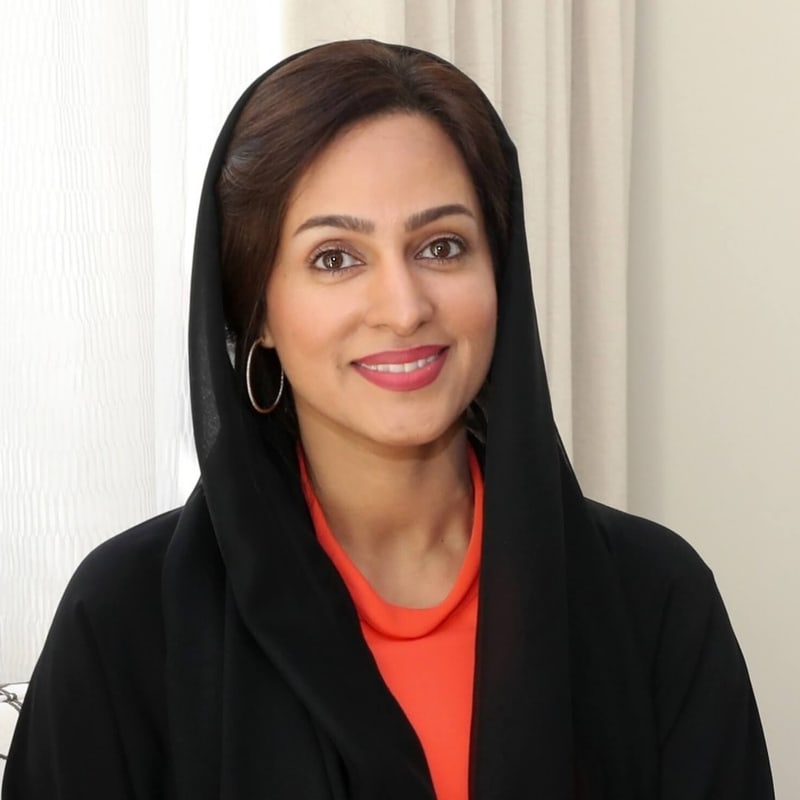
Portrait of Dr Maryam Matar

Founding editor

Dr Maryam Matar

Founder of the UAE Genetic Diseases Association, with documented work across public policy, genetic-disease prevention, regional science cooperation and epigenetics outreach. Roles are described as reported in each source and with their dates.

  • Public policy
  • Genetic testing
  • Geopolicy & science cooperation
  • Epigenetics & exposome
Read the biography and sources

الغاف

Prosopis cineraria

The Ghaf

A national tree as a model of resilience

Declared the UAE’s national tree in 2008 and selected as a symbol for the 2019 Year of Tolerance, the Ghaf connects Emirati heritage with the resilience of a living desert ecosystem.

Environment Agency – Abu Dhabi describes the Ghaf as drought-tolerant and important to desert plant and animal life. It identifies habitat loss and overgrazing among the tree’s threats.

Environment Agency – Abu Dhabi · Ghaf tree profile (opens in a new tab)

Our mark is an original drawing inspired by the paired pinnae and tiny leaflets of the compound Ghaf leaf. It is not an official government emblem or the Year of Tolerance logo.

02The frame

A wider view of the world around health.

01

Environmental

Air, water, heat and the places we inhabit.

02

Social

Work, mobility, access and the conditions of daily life.

03

Chemical & physical

The measurable exposures and physical forces in our surroundings.

04

Geopolitical

Regional systems and policy contexts that shape shared conditions.

03Regional outlook

Read the systems, not just the signals.

An editorial map of the questions linking heat, air, water and regional policy.

Explore the outlook
04A longer view

Ideas travel through time.
Evidence has its own chronology.

From ancient health perspectives to a 2005 scientific framework: a careful timeline, without rewriting history.

View the timeline
05Our promise

Clarity about what we know.

Cited

Primary sources and references close to the claims they support.

Bounded

Policy statements, historical accounts and independent evidence stay distinct.

Open

We show uncertainty and gaps rather than filling them with invented certainty.